Google Workspace + Google Cloud vs Microsoft 365 + Azure
•
By slashdotcom
•
4 min read
•
76 views
Choosing between Google Workspace + Google Cloud and Microsoft 365 + Azure isn’t just about features — it’s about sustainability, operational fit, and long‑term strategy. This guide compares both ecosystems through an ESG lens, explores which industries they suit best, and shows how slashdotcom helps organisations plan, migrate, and optimise with confidence.
The Ultimate Sustainability Showdown , And How to Choose the Right Ecosystem for Your Organisation
Choosing between Google Workspace + Google Cloud Platform (GCP) and Microsoft 365 + Microsoft Azure is no longer just a question of features or price. Today, organisations are under pressure to modernise, reduce emissions, extend device lifecycles, and align with ESG commitments. That means your choice of cloud and productivity ecosystem directly impacts your environmental footprint, operational efficiency, and long‑term digital strategy.
This definitive guide compares both ecosystems through a sustainability lens, explores which industries each platform suits best, and explains how slashdotcom helps organisations plan, migrate, and optimise their cloud environments.
This definitive guide compares both ecosystems through a sustainability lens, explores which industries each platform suits best, and explains how slashdotcom helps organisations plan, migrate, and optimise their cloud environments.
Why This Comparison Matters
The modern workplace is built on two pillars:
Productivity suite (email, collaboration, documents, identity)
Cloud platform (compute, storage, security, analytics)
Google and Microsoft dominate both pillars. But their approaches to sustainability, device efficiency, and cloud architecture differ significantly, and those differences matter for organisations aiming to reduce carbon emissions, lower energy consumption, and modernise responsibly.
Productivity suite (email, collaboration, documents, identity)
Cloud platform (compute, storage, security, analytics)
Google and Microsoft dominate both pillars. But their approaches to sustainability, device efficiency, and cloud architecture differ significantly, and those differences matter for organisations aiming to reduce carbon emissions, lower energy consumption, and modernise responsibly.
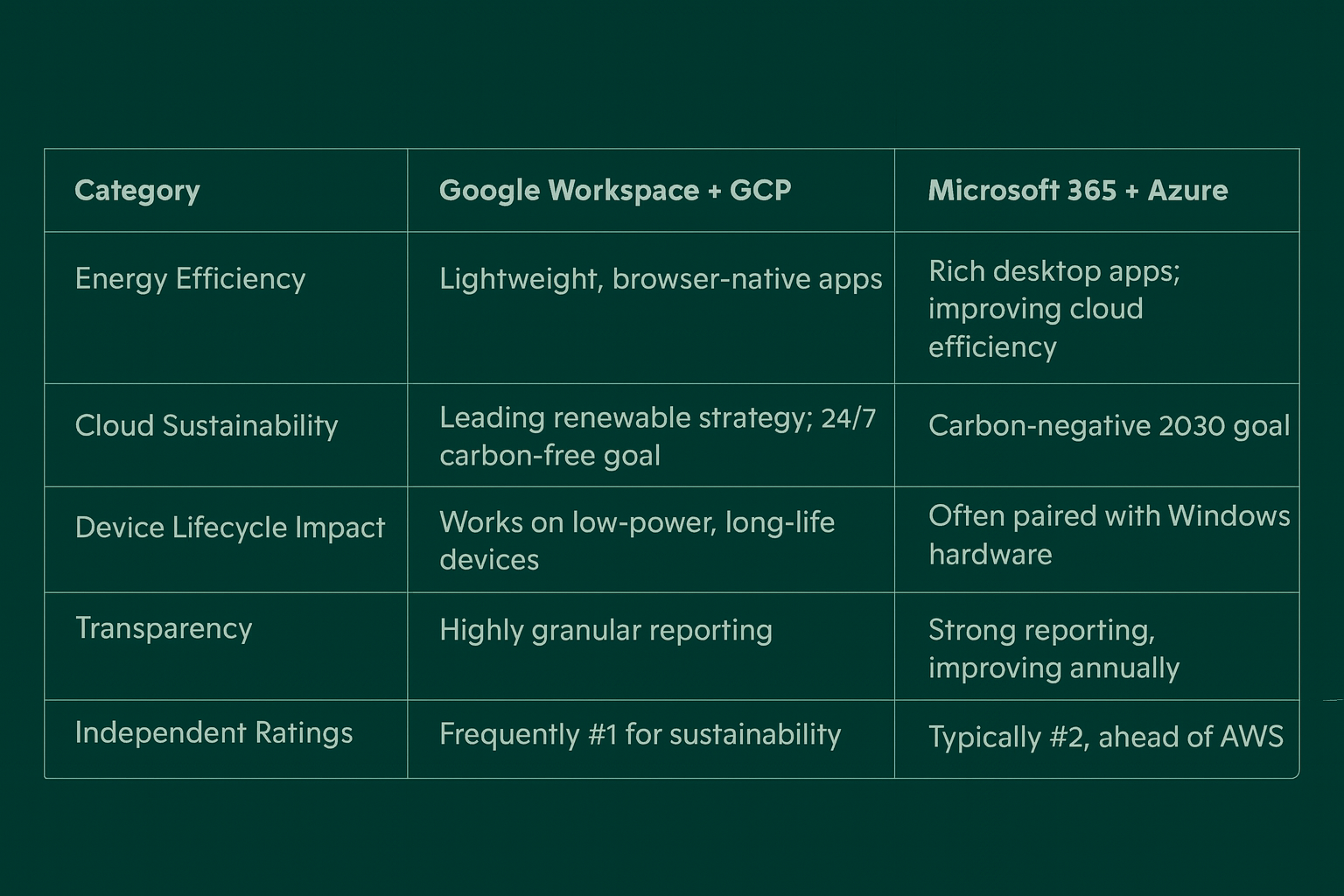
Sustainability Comparison: Who’s Greener?
Google Workspace + Google Cloud: Lightweight, Efficient, Transparent
Google has positioned itself as the sustainability leader among hyperscalers.
Key sustainability facts:
First major tech company to match 100% of electricity use with renewable energy.
Targeting 24/7 carbon‑free energy by 2030.
Workspace apps are browser‑native, reducing device energy consumption.
Chromebooks and low‑power devices extend hardware lifecycles and reduce e‑waste.
Google Cloud consistently ranks #1 in independent sustainability assessments.
What this means:
Google’s ecosystem is designed to be light, efficient, and low‑impact, making it ideal for organisations prioritising sustainability and device longevity.
Google has positioned itself as the sustainability leader among hyperscalers.
Key sustainability facts:
First major tech company to match 100% of electricity use with renewable energy.
Targeting 24/7 carbon‑free energy by 2030.
Workspace apps are browser‑native, reducing device energy consumption.
Chromebooks and low‑power devices extend hardware lifecycles and reduce e‑waste.
Google Cloud consistently ranks #1 in independent sustainability assessments.
What this means:
Google’s ecosystem is designed to be light, efficient, and low‑impact, making it ideal for organisations prioritising sustainability and device longevity.
Microsoft 365 + Azure: Enterprise‑Grade, Powerful, Ambitious
Microsoft 365 + Azure: Enterprise‑Grade, Powerful, Ambitious
Microsoft is a sustainability heavyweight with bold long‑term commitments.
Key sustainability facts:
Committed to becoming carbon negative by 2030.
Plans to remove all historical emissions by 2050.
Azure is rapidly expanding renewable energy procurement.
Microsoft 365 apps are feature‑rich and often paired with higher‑spec hardware, though cloud‑first optimisation is improving efficiency.
Strong governance, compliance, and reporting frameworks.
What this means:
Microsoft’s ecosystem is enterprise‑grade, powerful, and deeply integrated, with strong sustainability commitments but a heavier operational footprint.
Microsoft is a sustainability heavyweight with bold long‑term commitments.
Key sustainability facts:
Committed to becoming carbon negative by 2030.
Plans to remove all historical emissions by 2050.
Azure is rapidly expanding renewable energy procurement.
Microsoft 365 apps are feature‑rich and often paired with higher‑spec hardware, though cloud‑first optimisation is improving efficiency.
Strong governance, compliance, and reporting frameworks.
What this means:
Microsoft’s ecosystem is enterprise‑grade, powerful, and deeply integrated, with strong sustainability commitments but a heavier operational footprint.
Which Ecosystem Is Right for Your Organisation?
Best Fit for Google Workspace + Google Cloud
Google’s ecosystem excels where simplicity, collaboration, and sustainability are top priorities.
Ideal for:
Education
Startups and SMEs
Creative and collaborative teams
Sustainability‑driven organisations
Retail & e‑commerce
Research and data‑heavy environments
Why choose Google:
Lower device energy consumption
Strong sustainability leadership
Exceptional real‑time collaboration
Lower total cost of ownership
Fast deployment and minimal IT overhead
Ideal for:
Education
Startups and SMEs
Creative and collaborative teams
Sustainability‑driven organisations
Retail & e‑commerce
Research and data‑heavy environments
Why choose Google:
Lower device energy consumption
Strong sustainability leadership
Exceptional real‑time collaboration
Lower total cost of ownership
Fast deployment and minimal IT overhead
Best Fit for Microsoft 365 + Azure
Microsoft’s ecosystem is built for complexity, compliance, and enterprise‑grade operations.
Ideal for:
Public sector & government
Finance, legal, and regulated industries
Manufacturing & logistics
Enterprises with Windows/AD investments
Organisations needing hybrid or offline capability
Why choose Microsoft:
Mature enterprise security and governance
Deep integration across identity, devices, and cloud
Rich, powerful productivity apps
Broad global compliance coverage
Strong roadmap for carbon‑negative operations
Ideal for:
Public sector & government
Finance, legal, and regulated industries
Manufacturing & logistics
Enterprises with Windows/AD investments
Organisations needing hybrid or offline capability
Why choose Microsoft:
Mature enterprise security and governance
Deep integration across identity, devices, and cloud
Rich, powerful productivity apps
Broad global compliance coverage
Strong roadmap for carbon‑negative operations
Benefits of Each Ecosystem
Google Workspace + GCP
Lightweight, energy‑efficient apps
Lower hardware requirements
Industry‑leading sustainability strategy
Strong analytics and AI capabilities
Simple, intuitive collaboration
Lower hardware requirements
Industry‑leading sustainability strategy
Strong analytics and AI capabilities
Simple, intuitive collaboration
Microsoft 365 + Azure
Enterprise‑grade security and governance
Rich, powerful productivity apps
Hybrid cloud and on‑premises interoperability
Deep integration with Windows and identity
Broad global compliance coverage
Rich, powerful productivity apps
Hybrid cloud and on‑premises interoperability
Deep integration with Windows and identity
Broad global compliance coverage
How Slashdotcom Helps You Choose, Migrate, and Optimise
Choosing between Google and Microsoft isn’t just a technical decision. It’s strategic, operational, and increasingly environmental. slashdotcom helps organisations navigate this complexity with clarity and neutrality.
Sustainability‑Aligned Platform Assessments
We evaluate your current estate, carbon footprint, device lifecycle, and operational needs to recommend the ecosystem that aligns with your ESG goals.
Vendor‑Neutral Cloud Strategy
We don’t push a provider. We architect the right solution for your organisation’s size, complexity, and long‑term vision.
Migration Planning & Execution
Whether you’re moving to Google or Microsoft, we deliver:
Automated device preparation
Identity and access modernisation
Data and application migration
Security and compliance alignment
Zero‑disruption deployment frameworks
Automated device preparation
Identity and access modernisation
Data and application migration
Security and compliance alignment
Zero‑disruption deployment frameworks
Ongoing Operational Excellence
From sustainable device lifecycle management to cloud optimisation, we help you run greener, leaner, and more resilient digital operations.
Need Help Deciding?
slashdotcom is your strategic partner for Google Workspace, Google Cloud, Microsoft 365, and Azure. We combine sustainability expertise, operational rigour, and deep ecosystem knowledge to help you choose the right path — and execute it flawlessly.
If you’re planning a migration, exploring a hybrid model, or aligning your digital strategy with ESG goals, we’re ready to guide you.
If you’re planning a migration, exploring a hybrid model, or aligning your digital strategy with ESG goals, we’re ready to guide you.